Reverse Osmosis System
Reverse osmosis filtration reduces copper at the point of use, giving you consistent results at the tap regardless of what's happening in the plumbing between your meter and your kitchen sink.
Learn More
Unlike most contaminants on this list, copper in your water almost always comes from your own household plumbing, not the source water itself.
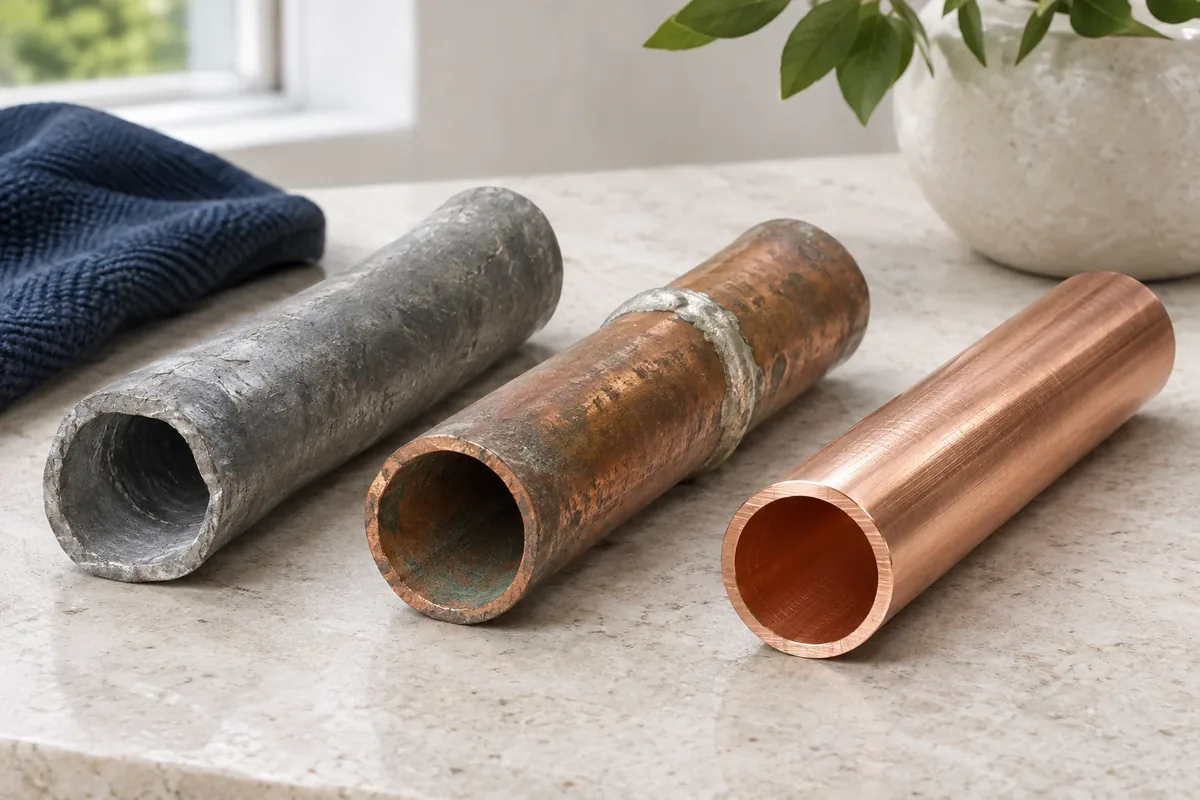
Copper is regulated two ways by the EPA. Under the Lead and Copper Rule, it has a health-based Action Level of 1.3 mg/L (a treatment-technique trigger, not a strict MCL). Separately, there's a lower Secondary Standard of 1.0 mg/L, set for taste and staining rather than health.
Copper almost always enters water from corrosion of your own copper pipes and brass fixtures, especially where water is acidic or soft — which is why, unlike many contaminants, it's frequently a plumbing issue rather than a source-water issue.
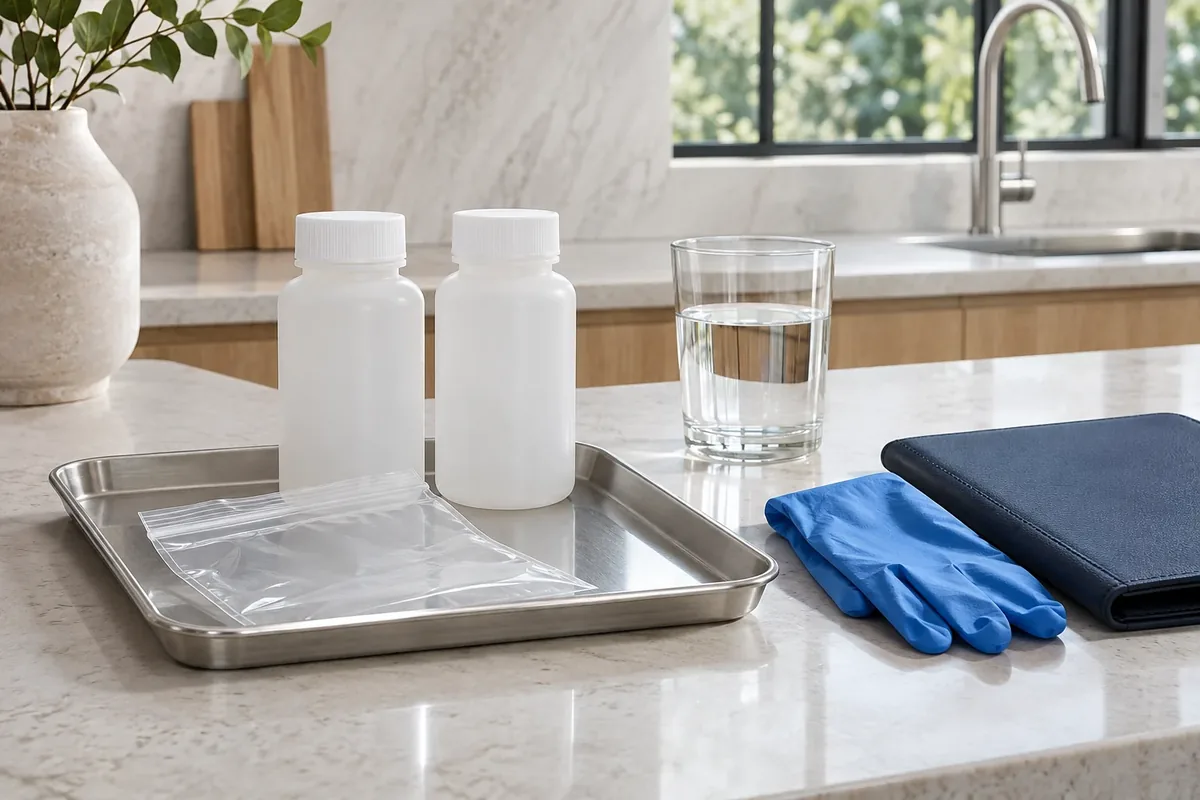
Reverse osmosis filtration reduces copper at the point of use, giving you consistent results at the tap regardless of what's happening in the plumbing between your meter and your kitchen sink.
Learn MoreNote: this is addressed by our reverse osmosis drinking-water system specifically — our whole-house filtration systems are not designed or certified to remove it.
We'll test it for free and show you exactly what a system would remove.
1.3 mg/L is the health-based Action Level under the Lead and Copper Rule. A separate, lower Secondary Standard of 1.0 mg/L applies for taste and staining.
Most often, copper or another metal corroding from your own household plumbing, particularly if your water is acidic or soft and sits in the pipes for a while.
Almost always your own plumbing — copper pipe and brass fixture corrosion, a mechanism similar to how lead leaches from older service lines.