Reverse Osmosis System
Reverse osmosis filtration reduces zinc along with other dissolved metals, which can help with taste even though zinc isn't a health-based regulatory concern at typical household levels.
Learn More
Of the metals on this list, zinc is one of the more benign — the EPA doesn't regulate it for health reasons at all, only for taste.
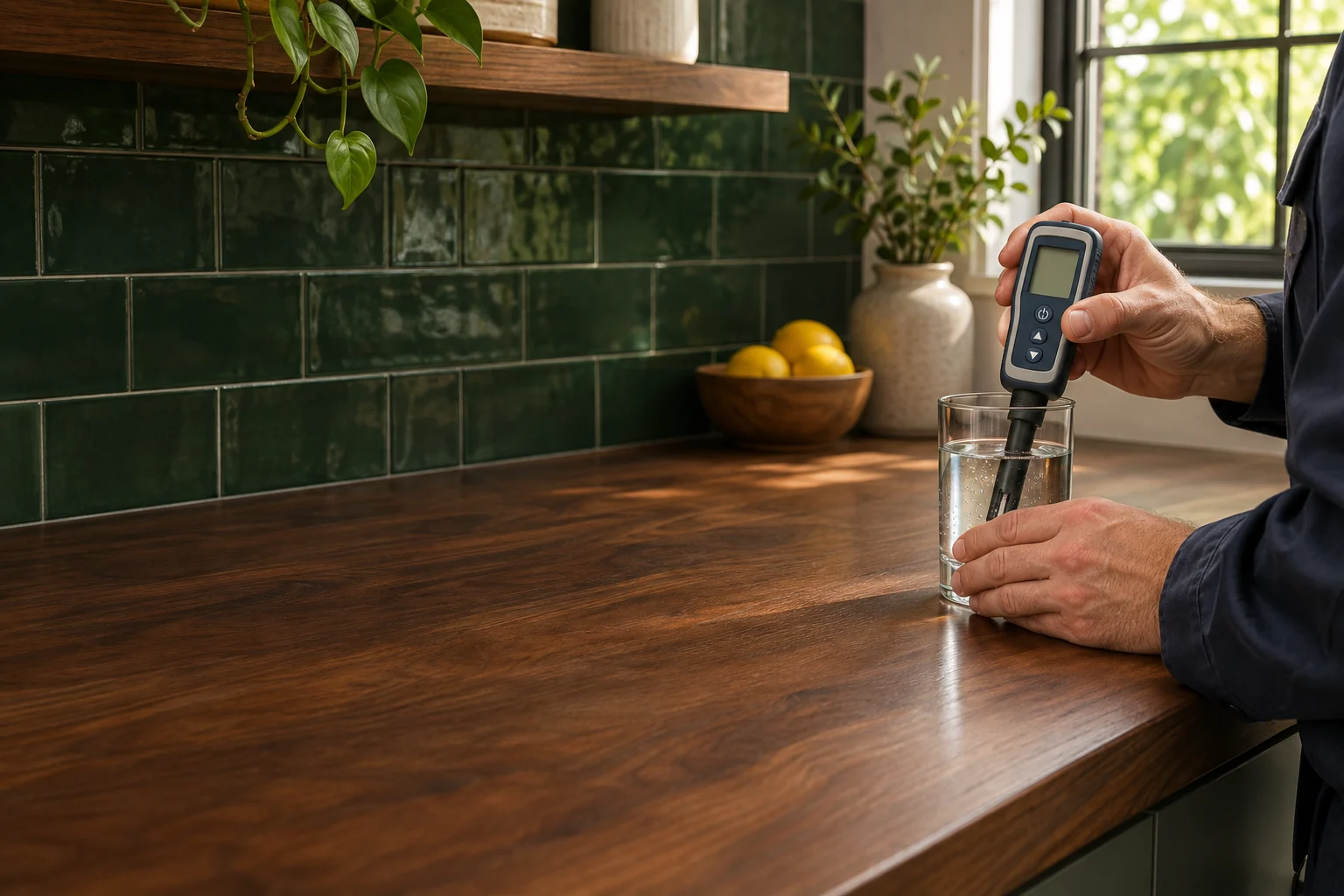
The EPA's standard for zinc is a Secondary Standard of 5 mg/L — a non-enforceable, aesthetic guideline rather than a health-based limit. Zinc at elevated levels is mainly a taste issue, not a documented health hazard at the concentrations typically found in household water.
It most commonly enters water from corroding galvanized pipe or brass fixtures, similar to several of the other metals on this list.
Reverse osmosis filtration reduces zinc along with other dissolved metals, which can help with taste even though zinc isn't a health-based regulatory concern at typical household levels.
Learn MoreNote: this is addressed by our reverse osmosis drinking-water system specifically — our whole-house filtration systems are not designed or certified to remove it.
We'll test it for free and show you exactly what a system would remove.
Not at typical levels — the EPA regulates it only as a non-enforceable aesthetic guideline (5 mg/L) for taste, not as a health-based standard.
Zinc, copper, or another metal corroding from galvanized pipe or brass fixtures is a common cause — testing identifies which one.
If it's affecting taste, yes — reverse osmosis reduces it along with other dissolved metals, even though it's not a required health fix.