

Prefilter + UV Sterilizer
Removes sediment and neutralizes bacteria and other microorganisms without chemicals — the standard first line of defense for well water.
Learn More
There's no utility checking your well, no annual report, and no agency requiring you to test it — in Pennsylvania, your well is entirely your own responsibility. Here's what's actually common in groundwater across Bucks, Montgomery and the surrounding counties, and what's worth testing for.
The Safe Drinking Water Act — the federal law that sets testing and treatment requirements for tap water — only covers public water systems. Private wells are explicitly exempt, so the EPA has no authority to test, regulate or monitor them. That responsibility falls entirely on the homeowner.
Pennsylvania adds another wrinkle: it's one of the few states with no statewide private well construction standards and no requirement to test a well regularly, before selling a home, or even after drilling a new one. The PA Department of Environmental Protection publishes testing recommendations, but following them is voluntary — some counties and municipalities have their own local ordinances, but there's no statewide mandate behind them.
In practice, that means what's in your well depends entirely on your local geology, the age and construction of the well itself, and what's happening on land nearby — and the only way to actually know is to test it yourself.
None of these show up in every well — what you have depends on your specific property. These are the ones we see most often across the wells we test.
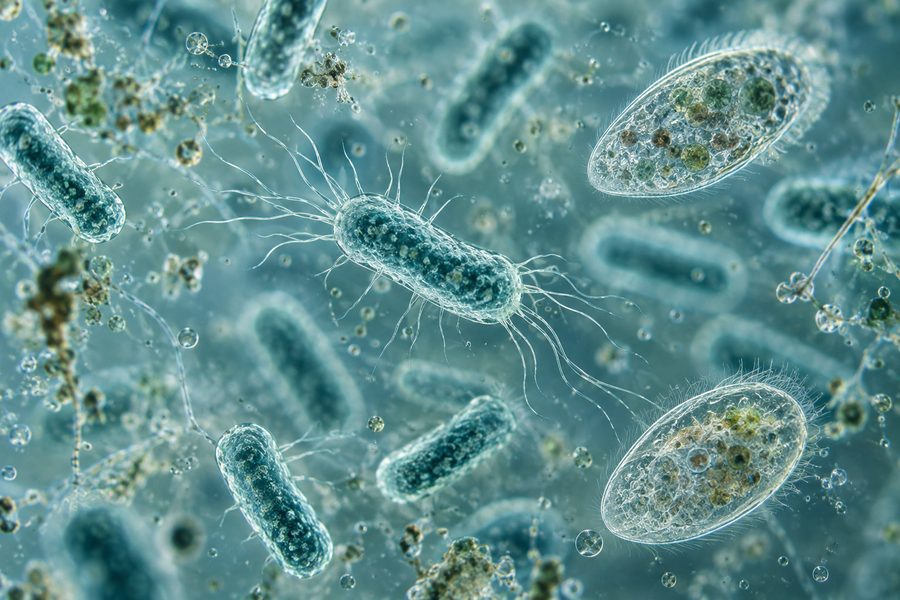
Total coliform and E. coli can enter through surface runoff, flooding, or a cracked or aging well casing — a positive test means disinfection is needed right away.
Learn More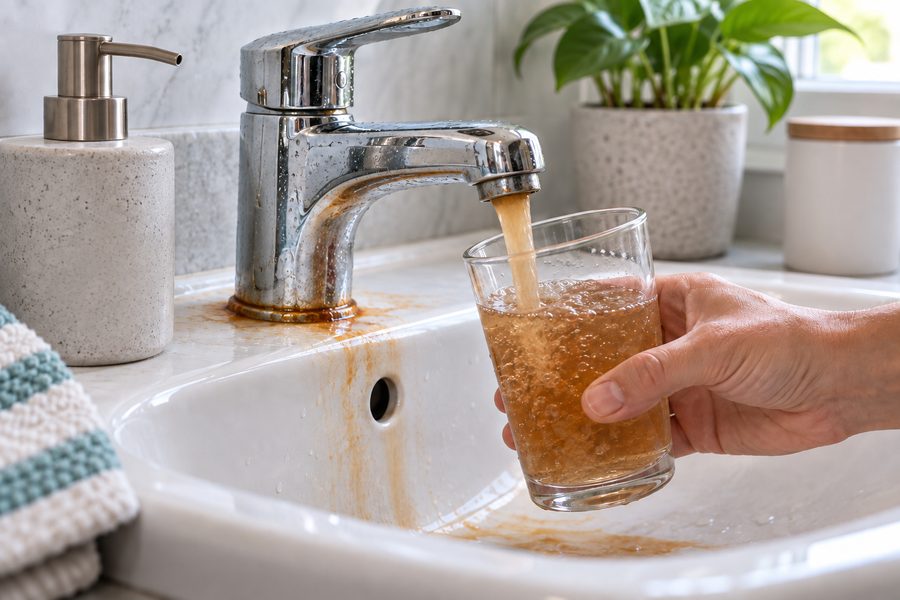
Naturally occurring in groundwater — causes rust-colored or black staining on fixtures, laundry and in the toilet tank, plus a metallic taste.
Learn More
Hydrogen sulfide gas, usually from naturally occurring sulfur bacteria in the well or aquifer — unpleasant, but typically not a health hazard on its own.
Learn More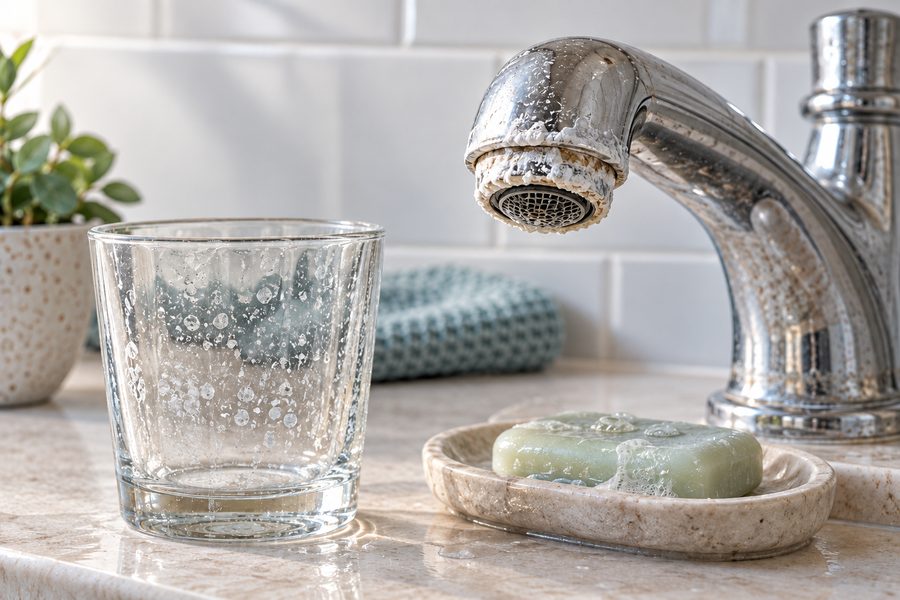
Calcium and magnesium dissolved from local bedrock — extremely common in this region's groundwater, and hard on appliances, pipes and skin over time.
Learn MoreRadon is a naturally occurring radioactive gas produced by the decay of uranium in rock and soil. It can enter a home through the foundation, but it can also dissolve into groundwater and release into the air every time well water runs — showering, running a dishwasher, doing laundry. The EPA has not yet set a federal limit for radon in drinking water specifically, but it does map indoor radon potential by county, and most of Bucks and Montgomery counties fall in Zone 1, the EPA's highest indoor radon potential category.
That joint USGS and Pennsylvania Department of Health study found radon concentrations in well water varied enormously by the specific rock the well draws from — wells drilled into the Peters Creek Schist formation, found in parts of York, Lancaster and Chester counties, showed some of the highest concentrations measured anywhere in the state. That finding is specific to that geologic unit, not a blanket statement about every well in the region — which is exactly why a county-level radon map can't tell you what's actually in your own well. The only way to know your number is a radon-in-water test.
Nitrates reach groundwater from fertilizer runoff, livestock waste and septic system effluent — all common across the historically agricultural land in and around Bucks, Montgomery and Chester counties, especially for wells near farmland or older, high-density septic areas. The EPA's health-based limit for public water systems is 10 mg/L measured as nitrate-nitrogen, and Penn State Extension recommends private well owners use that same number as their own benchmark, since no separate standard exists for wells.
The biggest concern is for infants, particularly those under six months old: high nitrate levels can cause methemoglobinemia, sometimes called "blue baby syndrome," which reduces the blood's ability to carry oxygen. It's a real reason to test before bringing a baby home to a house on well water — and worth re-testing periodically if your property is near cropland, pasture, or a cluster of septic systems.
Removes sediment and neutralizes bacteria and other microorganisms without chemicals — the standard first line of defense for well water.
Learn MoreReduces nitrates, radon, and the widest range of dissolved contaminants for pure, tested drinking water at the tap.
Learn MoreTackles iron, manganese, sulfur odor and hardness minerals together in one whole-home system built for well water.
Learn MoreFull-home coverage for well water — prefiltration, UV, softening and drinking-water RO combined into one system.
Learn MoreOn municipal or city water instead? See our Municipal & City Water guide. Sources: U.S. EPA (Safe Drinking Water Act private well exemption; radon indoor potential map; nitrate health advisory), Pennsylvania Department of Environmental Protection private well testing guidance, USGS & PA Department of Health joint groundwater radon study (1986–2015, 1,041 wells), Penn State Extension nitrates-in-private-water-systems guidance. Provided for general information — not a substitute for your own water test.
We'll test your water and walk you through exactly what we find — no cost, no obligation.